
Order by phone 0121 433 3389
Order by phone 0121 433 3389
All Carpets include FREE Fitting & FREE Delivery : Prices start from £3.99 m2
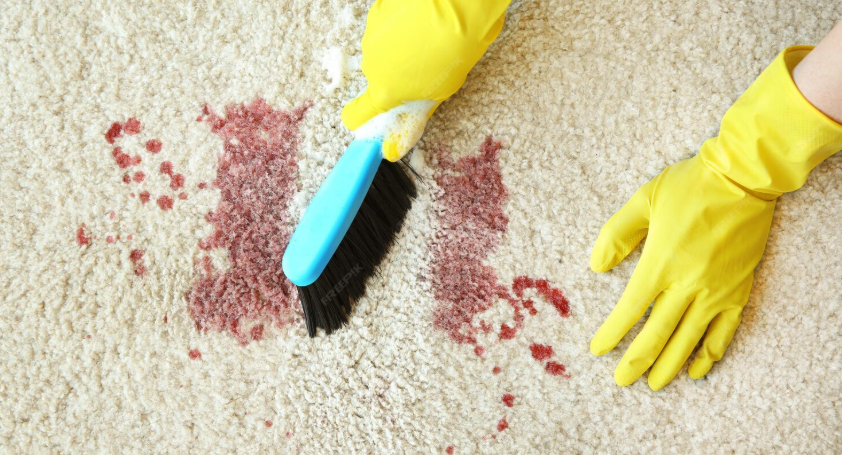
Carpet plays a major role in enhancing your home’s beauty. They serve as a foundational design element, adding texture and introducing colour to your home. Beyond visual appeal, it provides warmth, reduces noise, and creates a sense of cosiness and luxury. However, carpet is very susceptible to staining, particularly caused by substances like blood, which cannot be removed easily.
When blood gets on a carpet, it can cause a permanent stain if not treated quickly. Plus, they may carry bacteria that require proper cleaning to maintain hygiene in your setting. There are many methods you can use to remove blood from carpets and restore them to their original condition.
Blood stains are hard to remove due to their biological composition. When these stains are exposed to air and dried, they can stick to the carpet fibres.
There are several cleaning methods available, depending on the stain’s freshness or stubbornness.
When you see the initial stain on your carpet, use a detergent solution to break up and lift the blood. This is one of the best methods for fresh blood stains.
Create the Solution: To make a cleaning solution, you can mix a little dishwashing liquid with cold water. The dishwashing soap helps break down blood proteins and fats. Remember, make sure it is mixed well but not too soapy.
Apply and Blot: With a clean cloth, rub the stained area with the solution you made. The solution breaks the stain and lifts it from the carpet fibres.
If needed, you can use a new cloth and repeat the process until the stain is gone.
If the blood stains are stubborn or have dried and cannot be removed with the detergent solution, you need to use a specialised cleaner to remove them more effectively.
If the stain won’t come out, you can use enzyme cleaners. These cleaners are specifically designed to break down protein structures in blood, making it easier to remove from the carpet.
Apply the enzyme cleaner to the stain and let it sit for the instructed time to break it down. Always follow the product instructions for best results. After the stain has fully disappeared, gently blot the area with a clean cloth.
For stains that are very hard to remove, you can use a 3% hydrogen peroxide solution. This solution oxidises the stain and breaks it down, making it easy to remove from the carpet.
Before using the solution, you need to test it on an unobtrusive area to see whether it leaves its colour. If there is no colour change, you can apply hydrogen peroxide to the satin. Blot it with a clean cloth after a few minutes to remove the stain.
You can use common household items if you do not have specialised cleaners. These items can be very effective in removing blood from the carpet.
When removing blood from the carpet, you need to consider factors that help you clean it effectively without damaging the carpet.
Although DIY methods can be effective, there are a few circumstances that require professional assistance.
Removing blood stains from your carpet is essential for home aesthetics and for preventing disease. If you see a blood stain on the carpet, take quick action and the appropriate cleaning approach before it dries. By using different cleaning products, such as detergent solutions, enzyme cleaners, and alternative methods, you can lift stains and achieve a clean, hygienic carpet. You need to take essential precautions to help clean your carpet without spreading the stain further.

JJ’s Flooring is the fastest growing carpet & vinyl flooring retail brand with over 40 years of experience in serving the public and trade customers with quality at affordable prices.
Quick Links
Categories
Address:
1428 Pershore Road Stirchley Birmingham B30 2PH
Mobile:
0121 433 3389
Email:
contact@jjsonline.co.uk
Copyright © 2026 | JJ's Flooring | All rights Reserved.
Order in Confidence with Secure Online Payments

We accept all major credit & debit cards.
